
Brain Entrainment: Can Sound Really Help Train Your Brain?
Brain Entrainment: Can Sound Really Help Train Your Brain?
"Do not conform to the pattern of this world, but be transformed by the renewing of your mind." — Romans 12:2
The human brain is remarkable.
Every thought, every prayer, every memory, every decision, and every emotion is powered by billions of neurons communicating through tiny electrical impulses. Together, these electrical signals create rhythmic patterns known as brainwaves.
But what if those rhythms could be gently encouraged toward greater focus, relaxation, or mental clarity?
This question has fascinated scientists for decades and has led to growing interest in a field known as brain entrainment.
At Storehouse Wellness, we believe our minds are one of God's greatest gifts. While no technology can replace healthy lifestyle habits, prayer, or the work of the Holy Spirit, understanding how the brain functions gives us another opportunity to steward our health wisely.
What Is Brain Entrainment?
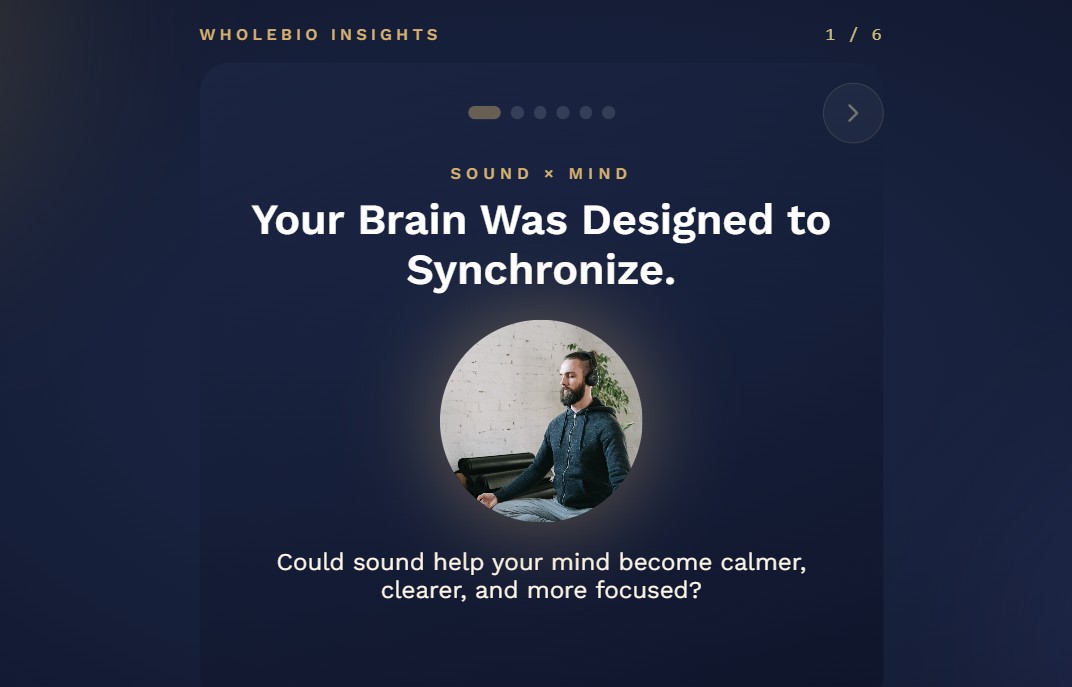
Brain entrainment—sometimes called brainwave entrainment—uses rhythmic sensory stimulation, most commonly sound, to encourage the brain to synchronize with a particular frequency.
Think about tapping your foot to the beat of a song.
Without realizing it, your body naturally synchronizes to rhythm.
Researchers believe the brain can respond similarly to repetitive auditory stimulation through a process called the frequency-following response, where electrical activity in the brain begins to mirror aspects of external rhythmic input.
Different frequencies have been associated with different mental states:
Delta – Deep sleep and physical restoration
Theta – Creativity, meditation, and deep relaxation
Alpha – Calm focus and reduced mental stress
Beta – Active thinking, concentration, and problem solving
Gamma – Complex learning and higher cognitive processing
While these brainwave patterns are real and measurable, it's important to understand that listening to a specific frequency does not guarantee a particular outcome. Instead, brain entrainment appears to create conditions that may help support certain mental states in some individuals.
🧪 Science Snapshot
Research reviews examining more than twenty clinical studies have found that brainwave entrainment has shown promising effects for improving attention, reducing stress, supporting relaxation, and enhancing certain aspects of cognitive performance. Researchers also note that larger, high-quality clinical trials are still needed before strong conclusions can be made.
Takeaway: The science is encouraging—but still evolving.
How Does It Work?
Your brain naturally shifts between different brainwave patterns throughout the day.
When you're deeply asleep...
...your brain behaves differently than when you're solving a math problem.
When you're quietly praying...
...your brain activity differs from when you're responding to an emergency.
Brain entrainment attempts to provide gentle rhythmic cues that encourage the brain toward these naturally occurring patterns—not by forcing the brain, but by providing consistent sensory input it may synchronize with.
This concept has been explored using binaural beats, isochronic tones, rhythmic music, and other sound-based technologies.
What Does the Research Actually Say?
One thing we value at Storehouse Wellness is separating evidence from hype.
Some online claims suggest brain entrainment can cure disease, dramatically increase intelligence, or permanently transform your brain overnight.
Current scientific evidence simply does not support those claims.
What research does suggest is that certain forms of auditory brain stimulation may help:
Improve relaxation
Support stress reduction
Increase attention during certain tasks
Enhance meditation practices
Improve some measures of working memory and cognitive performance
Results vary significantly depending on the technology used, the individual, the duration of use, and the quality of the research.
In other words...
Brain entrainment is best viewed as one supportive wellness tool—not a miracle solution.
🧪 Science Snapshot
Chronic stress doesn't simply affect how we feel—it changes how our brains function.
Long-term stress has been associated with impaired memory, reduced attention, disrupted sleep, increased inflammation, and changes in areas of the brain involved in learning and emotional regulation.
Reducing stress is about far more than "feeling calmer." It's an investment in long-term brain health.
The Brain Was Designed to Adapt
One of the most encouraging discoveries in neuroscience is neuroplasticity.
Your brain is continually adapting based on what you repeatedly think, practice, experience, and believe.
Healthy habits literally help shape healthy brains.
This is why simple daily practices matter:
Prayer
Worship
Quality sleep
Exercise
Gratitude
Time in God's Word
Healthy relationships
Stress management
Technology may provide additional support, but lasting transformation still happens through consistent lifestyle choices.
As Romans 12 reminds us, true transformation comes through the renewing of our minds.
Science simply helps us appreciate how wonderfully God designed that process.
Where Brain Entrainment Fits Into Whole-Person Wellness
At Storehouse Wellness, we don't believe in isolated solutions.
Instead, we believe wellness happens when multiple systems work together.
That's why our approach combines:
Nourishment
Physical movement
Mental wellness
Spiritual growth
Personalized insights
Community
Evidence-informed wellness technologies
Our WholeBio Insights experience is designed to help individuals better understand their unique wellness picture before building a personalized path forward. Rather than relying on guesswork, members receive a structured approach that integrates assessment, coaching, faith, and practical lifestyle strategies.
Some of our wellness experiences also incorporate advanced sound- and frequency-based technologies as supportive tools alongside foundational habits—not as replacements for them.
Our Perspective
Wellness doesn't come from one supplement.
One workout.
One frequency.
Or one technology.
It comes from consistently caring for the incredible body and mind God entrusted to us.
Brain entrainment is an exciting area of research because it reminds us that our brains are dynamic, adaptable, and responsive to the environments we create.
As the science continues to grow, we'll continue doing what we've always done:
Following the evidence.
Keeping Christ at the center.
Helping people build healthier lives—one faithful step at a time.
References
• Cormier J, et al. Brainwave entrainment: A systematic review of clinical evidence. Neuroscience & Biobehavioral Reviews.
• American Psychological Association. Stress in America reports.
• National Institutes of Health. Research on music, auditory stimulation, and brain function.
• Storehouse Wellness Whitepaper: Integrated Christ-Centered Wellness and Whole-Person Health.
