
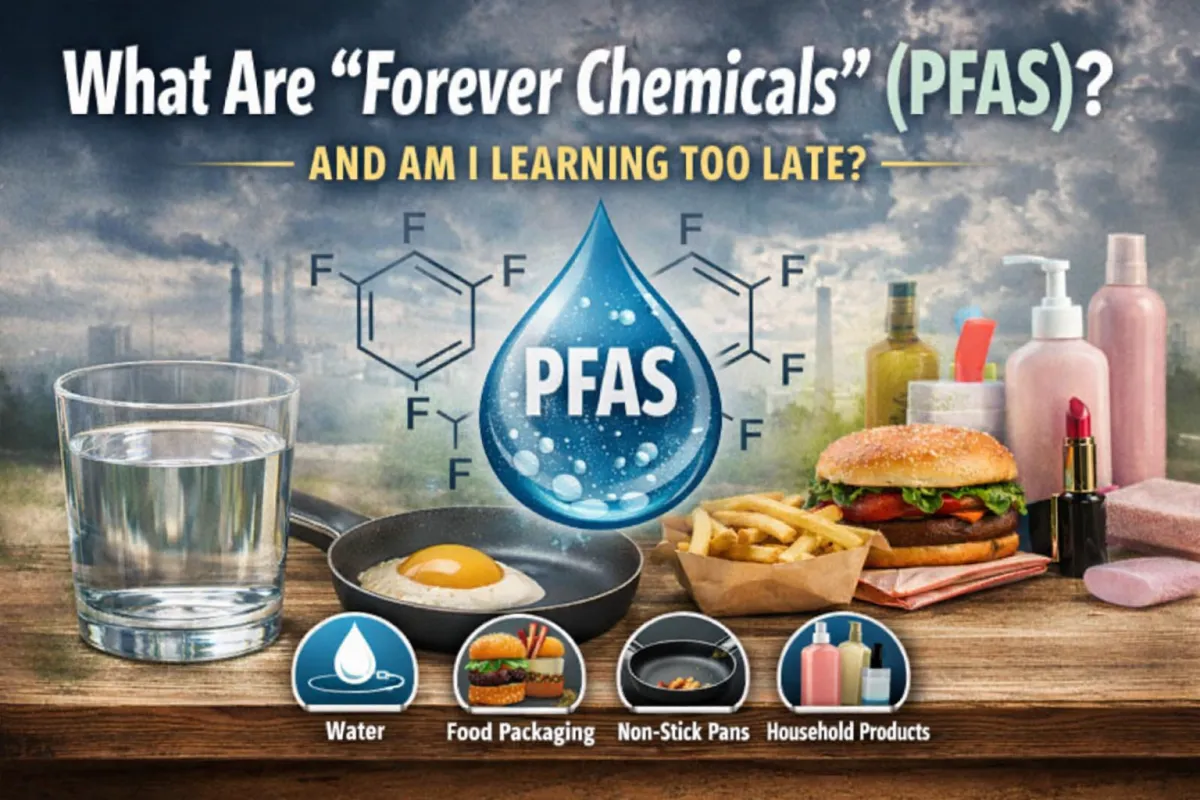
What Are “Forever Chemicals” (PFAS) — And Am I Learning Too Late?
What Are “Forever Chemicals” (PFAS) — And Am I Learning Too Late?
Over the last few years, a troubling phrase has begun appearing in news headlines, environmental reports, and public health discussions:
“Forever chemicals.”
If you’ve recently heard about them, you may have had the same thought many people do:
Why am I just now learning about this?
And perhaps even more concerning:
Is it too late to protect myself and my family?
The good news is that understanding these chemicals—even now—can still empower us to make meaningful changes for our health and our homes.
What Are Forever Chemicals?
“Forever chemicals” is the nickname for a group of synthetic compounds called PFAS (per- and polyfluoroalkyl substances).
These chemicals were developed in the 1940s and became widely used because they are extremely durable and resistant to heat, oil, grease, and water.
That durability is what made them commercially valuable.
But it’s also what makes them concerning.
PFAS do not break down easily in the environment or in the human body. Instead, they persist for years or even decades, which is why scientists began calling them forever chemicals.
Today, PFAS have been detected in:
drinking water
soil
food packaging
household products
clothing and furniture
human blood samples
In fact, studies suggest that most Americans already have measurable PFAS levels in their bodies.
Where Are PFAS Commonly Found?
PFAS have been used in thousands of products for decades.
Some common sources include:
• Non-stick cookware
• Water-resistant clothing
• Food packaging (especially fast-food wrappers)
• Stain-resistant carpets and upholstery
• Firefighting foams
• Certain cosmetics
• Some dental floss and personal care products
Because these chemicals were designed to repel water and grease, they became extremely popular in manufacturing.
Unfortunately, the long-term health effects were not fully understood when many of these products entered the market.
Why Are Scientists Concerned?
Research over the last two decades has linked PFAS exposure to several potential health concerns, including:
immune system disruption
hormone interference
increased cholesterol levels
reproductive challenges
developmental concerns in children
increased risk of certain cancers
Not everyone exposed will develop these issues, but the persistence of these chemicals has raised legitimate public health concerns.
This is why regulatory agencies are now beginning to tighten guidelines around PFAS exposure.
Am I Learning About This Too Late?
It’s a natural question.
When people learn that these chemicals have been present in our environment for decades, it can feel discouraging.
But here’s the important truth:
Learning now is still powerful.
Our bodies are remarkably resilient, and there are many ways we can reduce ongoing exposure and support our health moving forward.
Think of this moment not as “too late,” but as a turning point toward greater awareness and stewardship.
Practical Steps to Reduce Exposure
While it’s nearly impossible to eliminate PFAS exposure entirely, there are several steps that can meaningfully reduce your daily exposure.
1. Filter Drinking Water
High-quality water filtration systems (especially activated carbon or reverse osmosis filters) can significantly reduce PFAS levels in drinking water.
2. Limit Non-Stick Cookware
Consider transitioning to safer cookware materials such as:
stainless steel
cast iron
ceramic
3. Be Mindful of Food Packaging
Grease-resistant fast-food wrappers and microwave popcorn bags have historically contained PFAS.
Choosing whole foods and minimizing processed packaging can reduce exposure.
4. Check Personal Care Products
Some cosmetics and personal care items may contain PFAS for water resistance.
Choosing simpler ingredient lists can help reduce unnecessary exposure.
Supporting the Body’s Natural Detox Systems
Our bodies are equipped with natural detoxification systems, including the liver, kidneys, digestive system, and lymphatic system.
Healthy habits that support these systems include:
drinking adequate water
eating fiber-rich foods
regular physical activity
sweating through exercise or sauna
prioritizing sleep
These lifestyle practices support the body’s ability to process and eliminate environmental exposures over time.
A Faith Perspective on Environmental Stewardship
For Christians, conversations about environmental toxins are not rooted in fear but in stewardship.
Scripture reminds us that our bodies are temples of the Holy Spirit (1 Corinthians 6:19).
Caring for our health—and learning about potential environmental risks—is one way we honor that stewardship.
At the same time, we are not called to live in anxiety.
God designed our bodies with remarkable resilience and restoration capabilities. Awareness should lead us to wisdom and action, not fear.
Moving Forward With Wisdom, Not Worry
The discovery of PFAS contamination has sparked important conversations about manufacturing practices, environmental stewardship, and public health.
While the presence of these chemicals in our environment is concerning, it does not mean our situation is hopeless.
Every step toward:
cleaner water
more thoughtful product choices
healthier lifestyle habits
helps move us in a positive direction.
And perhaps most importantly, knowledge empowers us to make wiser decisions for ourselves and the generations that follow.
Final Thought
Learning about environmental toxins like PFAS can be unsettling.
But it can also be an invitation—to become more informed, more intentional, and more committed to caring for the bodies God has entrusted to us.
It’s not about fear.
It’s about wisdom, stewardship, and hope.
Because when we take small steps toward healthier living, they can add up to meaningful change over time.
If you are ready to learn about the hidden dangers in our environment (mind, body, and spirit) that could be impacting how you feel, sign up for our individual or group wellness membership program today!
