Is It the Food? Explaining Your Body's Reactions
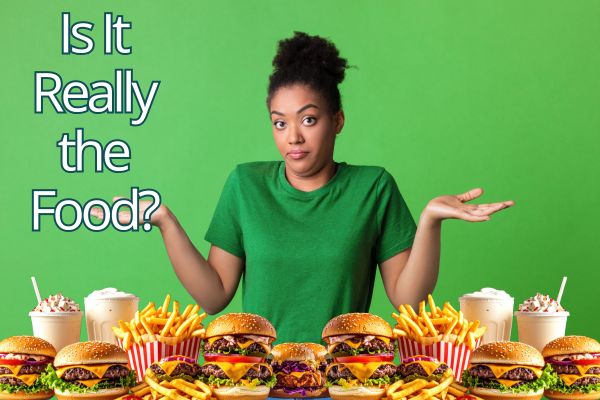
Is It Really the Food? Why Your Body May Be Reacting to More Than What's on the Label
"I can't eat gluten."
"Dairy hates me."
"Eggs make me feel terrible."
If you've ever said one of those statements—or heard someone else say them—you're certainly not alone. Over the last decade, food elimination has become one of the most common wellness strategies. Sometimes it's absolutely necessary. Other times, it may lead to unnecessary restriction, confusion, and frustration.
The question I'd encourage you to ask isn't simply: "What food made me sick?"
It's: "What exactly was I eating?"
That single question can completely change your health journey.
Not Every Food Reaction Is an Allergy
One of the biggest misconceptions in nutrition is that every negative reaction to food must be an allergy. In reality, food-related reactions generally fall into several categories.
Food Allergy
A true food allergy involves the immune system, often through IgE antibodies. Symptoms may include hives, swelling, wheezing, vomiting, or even life-threatening anaphylaxis. These reactions require medical evaluation and should never be ignored.
Food Intolerance
Food intolerances are different. Instead of the immune system, they often involve difficulty digesting or processing a food. Lactose intolerance is a classic example. The symptoms are usually uncomfortable rather than dangerous, including bloating, gas, abdominal pain, or diarrhea.
Food Sensitivity
Food sensitivities are perhaps the most confusing category.
Some individuals consistently experience symptoms after eating certain foods, yet the underlying mechanisms aren't always fully understood. Symptoms can vary from digestive complaints and headaches to fatigue or brain fog. Because these symptoms are nonspecific and can have many causes, it's important not to jump to conclusions without a thoughtful evaluation.
But What If It Isn't the Food?
This is where things get interesting. Imagine you eat a blueberry muffin.
Was your body reacting to:
Wheat?
Eggs?
Milk?
Butter?
Sugar?
Artificial flavoring?
Preservatives?
Emulsifiers?
Food coloring?
Something else entirely?
Many processed foods contain dozens of ingredients beyond the one we tend to blame. Sometimes it's impossible to know which ingredient is responsible without a systematic approach.
Processing Matters
A tomato picked fresh from your garden isn't necessarily the same experience as ketchup loaded with added sugar, preservatives, stabilizers, and flavor enhancers.
Likewise:
Plain yogurt differs from sweetened, flavored yogurt.
Steel-cut oats differ from highly processed instant oatmeal.
Fresh chicken differs from heavily processed breaded nuggets.
Food isn't just food anymore.
How it's grown, processed, preserved, flavored, and packaged may all influence how your body responds.
Why Elimination Diets Can Be So Helpful
One of the most effective ways to investigate food-related symptoms is through a carefully planned elimination diet.
The goal isn't to remove foods forever.
The goal is to gather information.
A well-designed elimination diet generally includes three phases:
Remove
Temporarily eliminate foods that are suspected of contributing to symptoms.
Heal and Observe
Pay attention to changes in digestion, energy, skin, mood, headaches, sleep, and other symptoms.
Reintroduce
One by one, systematically reintroduce foods while observing your body's response.
This step is just as important as elimination.
Without reintroduction, you may never learn what your body actually tolerates.
Reintroduce Foods in Their Simplest Form
This is one of my favorite clinical pearls.
If you're testing dairy...
Start with plain, minimally processed yogurt or plain milk—not ice cream loaded with gums, stabilizers, and added sugars.
If you're testing oats...
Try plain rolled or steel-cut oats—not maple brown sugar instant packets.
If you're testing tomatoes...
Start with fresh tomatoes—not pizza covered in processed cheese, refined flour, and cured meats.
The simpler the food, the easier it becomes to identify what's actually causing symptoms.
Don't Chase Restriction. Chase Understanding.
One of the saddest things I see is someone who has gradually eliminated dairy, gluten, eggs, nuts, soy, corn, legumes, and fruit—not because each food was carefully evaluated, but because they became afraid to eat. That isn't freedom.
Our goal should never be to create the most restrictive diet possible.
Our goal should be to build the most nourishing diet your individual body can thrive on.
Sometimes that means removing a food. Sometimes it means discovering you can enjoy it in a different form. Sometimes it means realizing the issue wasn't the food at all.
Become a Health Detective
At WholeBio Insights by Storehouse Wellness, we encourage people to become curious rather than fearful.
Instead of asking:
"What's the perfect diet?"
Ask:
What patterns do I notice?
When do my symptoms occur?
What was different about that meal?
Was I stressed?
Did I sleep well?
Was the food minimally processed?
How did I prepare it?
Your body often leaves clues. You simply have to learn how to recognize them.
Our Philosophy
Every person is wonderfully and uniquely made.
That's why we don't believe in one-size-fits-all nutrition.
We believe in personalized wellness.
Food should nourish you. Not confuse you. Not frighten you. Not become something you're constantly worried about.
Sometimes the most powerful step toward healing isn't finding the next superfood.
It's finally understanding how your body was designed to respond.
"I praise You because I am fearfully and wonderfully made." — Psalm 139:14
Science References
American Academy of Allergy, Asthma & Immunology – Food allergy overview.
National Institute of Diabetes and Digestive and Kidney Diseases – Food intolerances and digestive health.
American College of Gastroenterology – Clinical guidance on elimination diets and functional gastrointestinal disorders.
Educational Disclaimer:
This content is provided for educational and informational purposes only and is not intended to diagnose, treat, cure, or prevent any disease. The information shared should not be considered medical advice and should not replace consultation with a qualified healthcare professional. Always speak with your physician or trusted healthcare provider before beginning any new wellness practice, therapy, supplement, or treatment, especially if you are pregnant, have a medical condition, use implanted medical devices, or take prescription medications. Storehouse Wellness and WholeBio Insights provide wellness education and support, not medical diagnosis or treatment.
